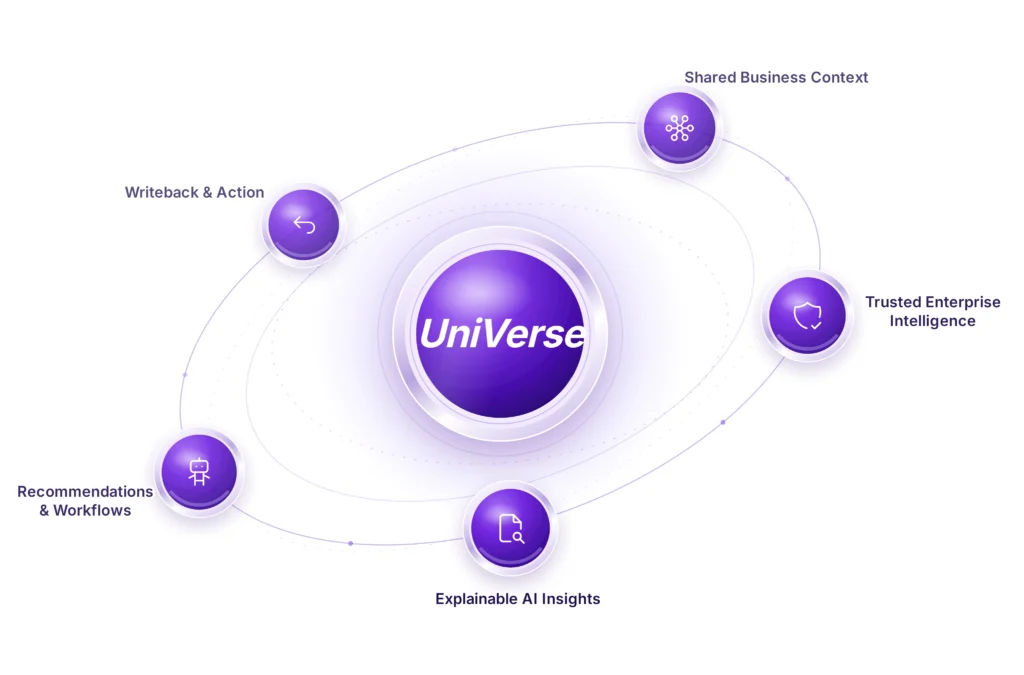
UniVerse by Trinamix: Enterprise AI that actually knows your business.
UniVerse by Trinamix connects every system you already run, turns their data into one shared model of your business, and answers the questions that cross six systems and five departments then triggers the action.
 Cross-system analysis that takes your team
 hours → answered in minutes
 One plain-English question → every system at once, sources attached
A platform like this
usually takes years.
UniVerse is live in weeks.
Standing up a semantic layer over your enterprise, the old way, is an 18-to-36-month program of data modelling, warehousing and integration before anyone sees an answer. UniVerse connects the systems you already run and delivers trusted answers in weeks, because the business model is the product, not a project you build first.
The traditional path
18–36 months
Warehouse, model, integrate, govern then, maybe, ask a question.
- Rip-and-replace or a multi-year data-lake migration
- Hand-built semantic model before AI can be trusted
- Value arrives at the end, if the program survives
With UniVerse
Weeks
Connect in place, map to the business model, start answering on your data.
- No rip-and-replace, no migration first
- One governed model, populated from the systems you run today
- A real business question answered in the first weeks, not the final quarter
What Is UniVerse
Everyone has data. Almost nobody has meaning. UniVerse closes that gap.
Your margin, your risk, and your best decisions are spread across six systems that were never designed to talk to each other. UniVerse connects every system you already run, turns their data into one governed model of your business, and answers the questions that cross six systems and five departments. In minutes, with the sources attached.
It does not stop at answers. Agents watch the business, raise only what needs a decision, and write the approved action back into your systems of record. Agents propose. Your people decide.
Nothing ripped out. Nothing migrated first. Live in weeks, not an 18 to 36 month program.
How the UniVerse Works
Connect. Unify. Act.
Connect every system, document, and signal, without rip and replace.
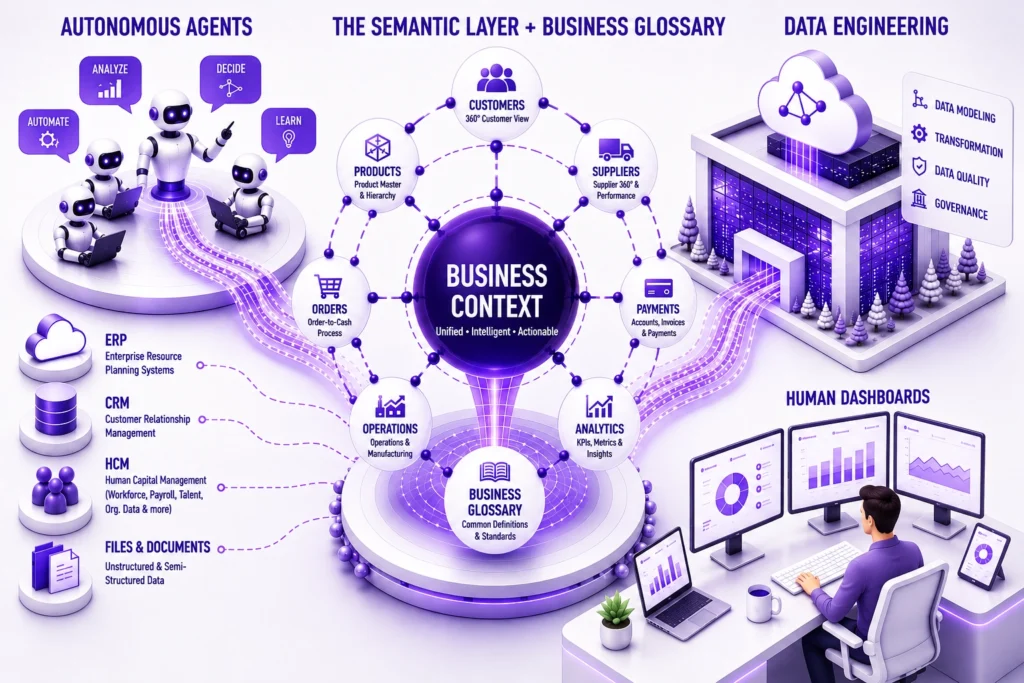
ERP, CRM, supply chain, documents, external data, and operational signals, brought into one foundation. Nothing is ripped out. Nothing is migrated first. The connectors run inside your network, and the systems that power your business today stay intact and stay in charge.
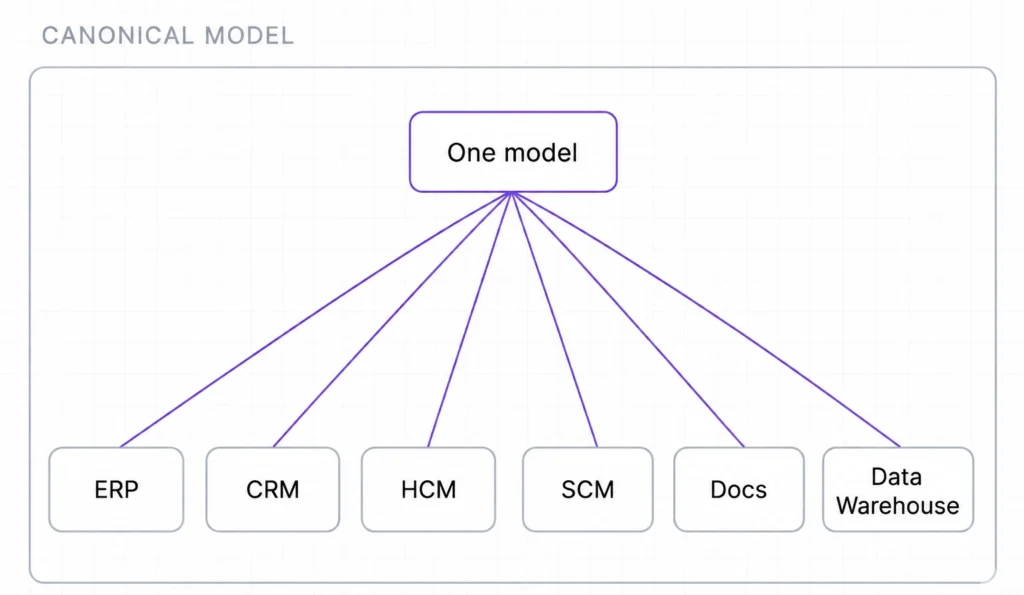
One governed model of your business, across every source system.
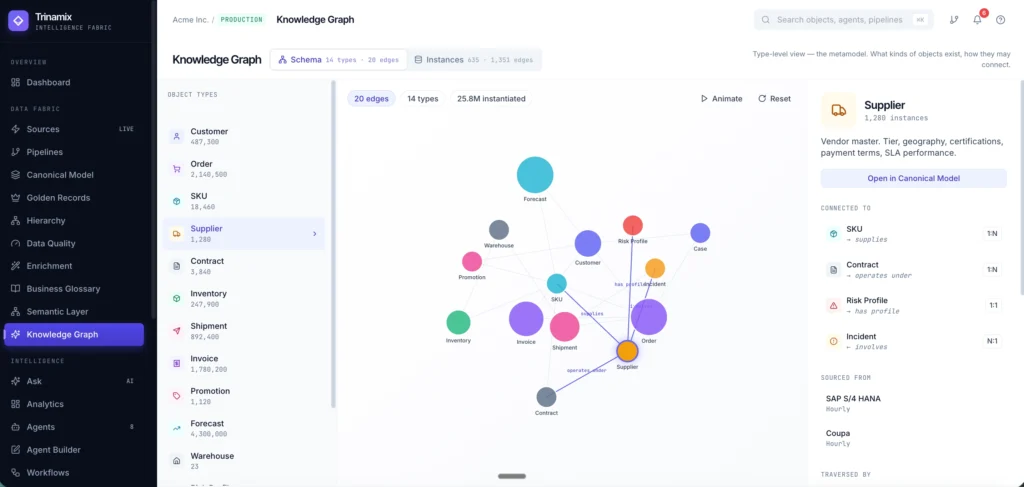
UniVerse translates source-specific data, transactions, and business context into shared business objects and relationships. One definition of every metric. One name for every relationship. That universal layer becomes the semantic foundation for analytics, decision intelligence, AI agents, and automation, built once and inherited by every use case that follows.
Example business objects
- Customer
- Supplier
- Item
- Order
- Shipment
- Invoice
- Asset
- Location
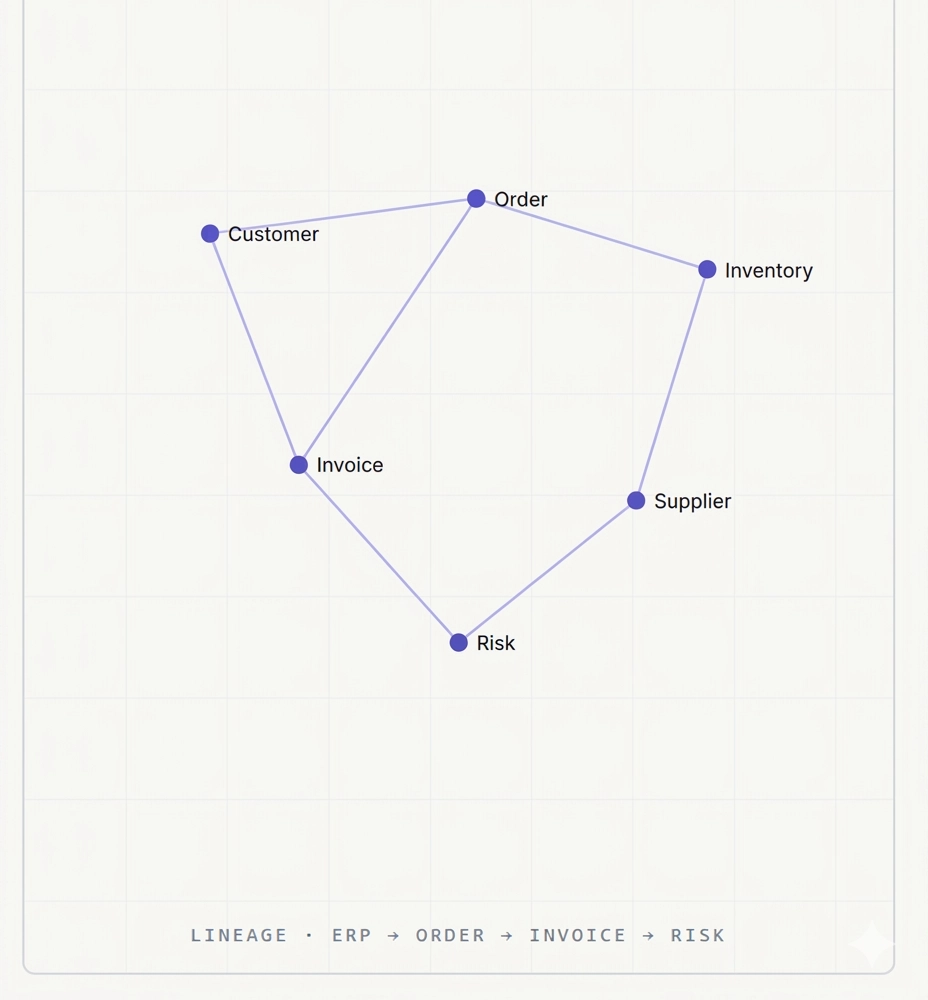
Turn business context into outcomes
With the shared model in place, UniVerse powers self-service analytics, decision intelligence, AI copilots, agents, and workflow automation. Teams move from insight to action across every system, grounded in trusted business context. Agents propose the transfer, the price move, the reallocation, and write it back into your systems of record once a human approves.
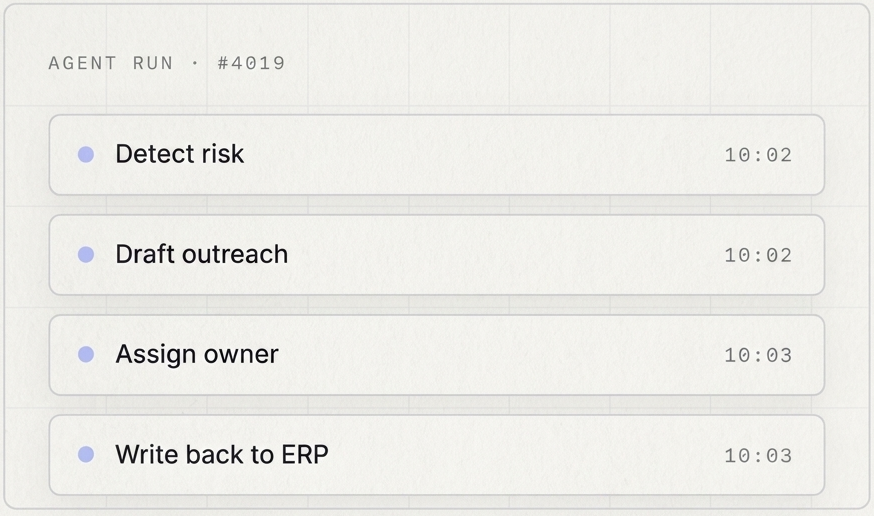
Key Capabilities
Built for the modern enterprise. Ready for AI.
Everything UniVerse needs to connect, unify, and act. One platform, not eight separate projects.
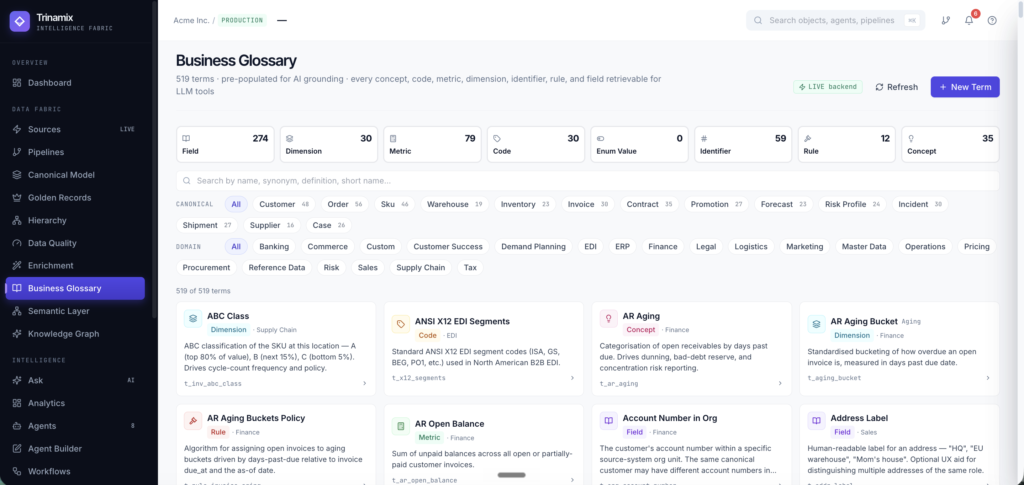
Your customer exists in five systems under five names. UniVerse merges them into one record you can trust.
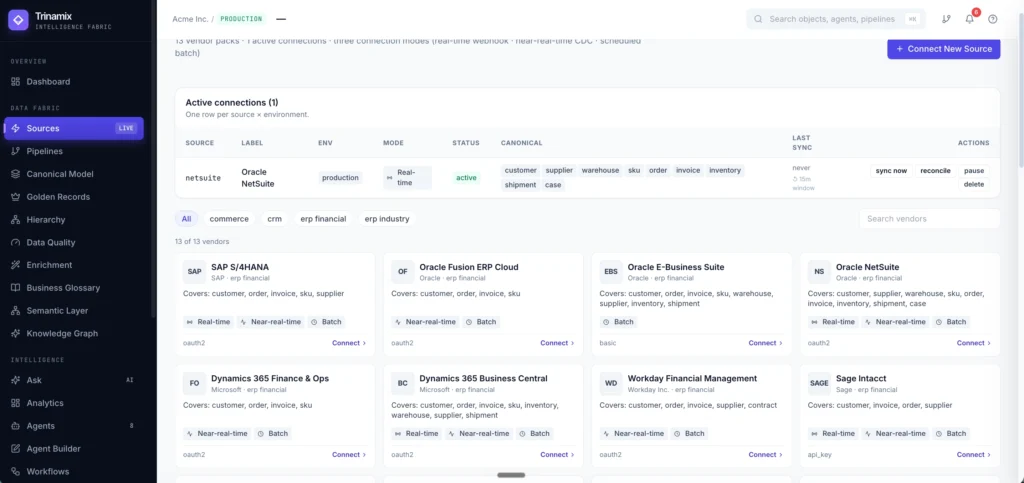
Maps how your business objects relate to one another, so AI reasons across the business instead of reading disconnected tables.
Pre-built and custom agents that monitor the business, decide, and act on your behalf. No multi-week build cycle for every new use case.
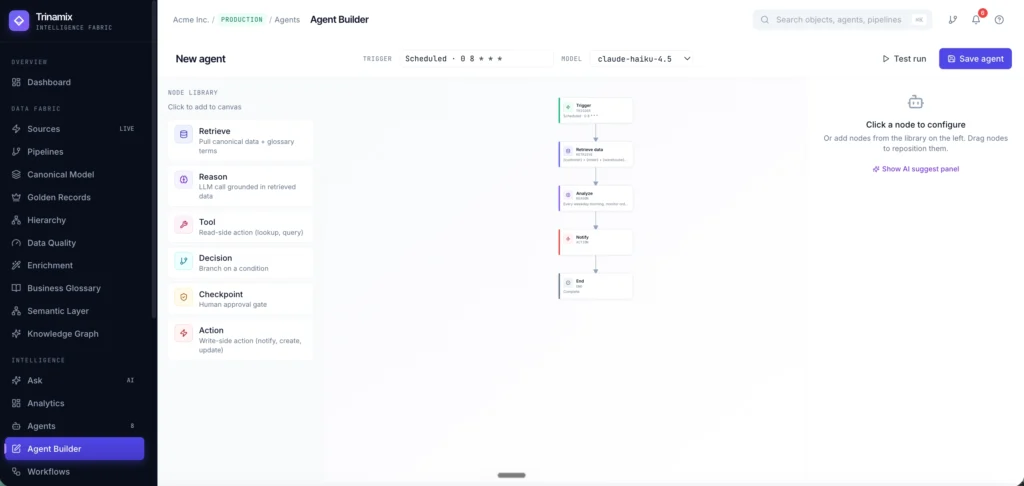
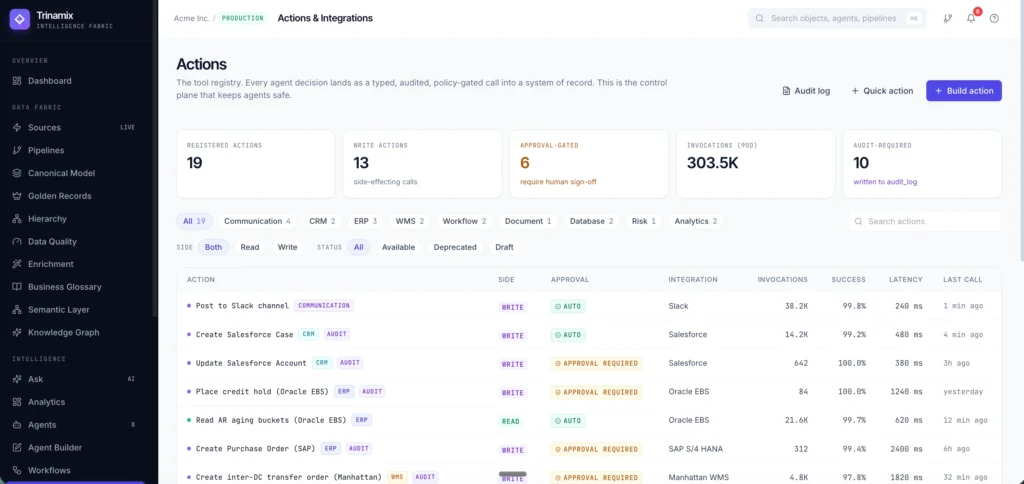
Turn any answer or recommendation directly into action, written back into the systems that run the business, with approval and full audit.
One governed definition of Customer, Order, Supplier, and Item, with duplicate and conflicting records resolved, so AI and business users read the data the same way.
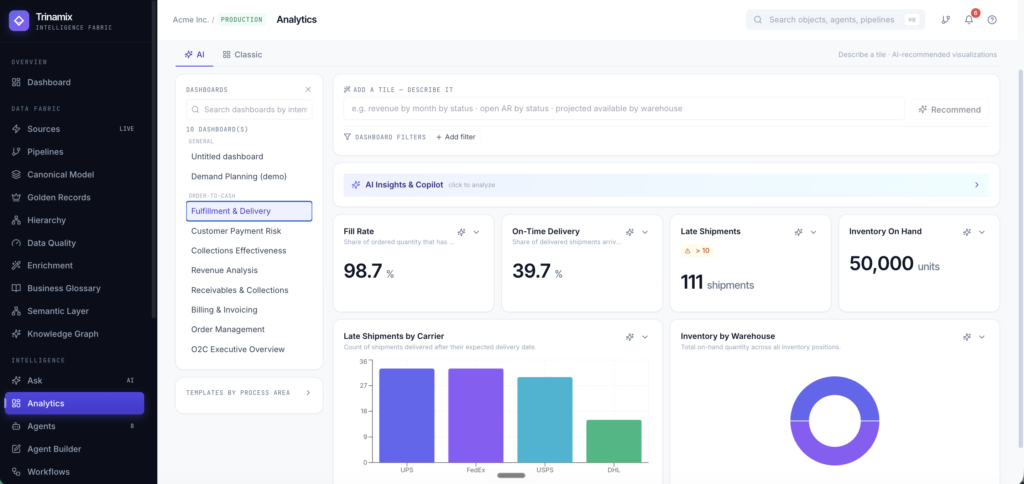
Describe what you want to see, and it gets built. No BI ticket. No data-model project. No one-off reporting requests.
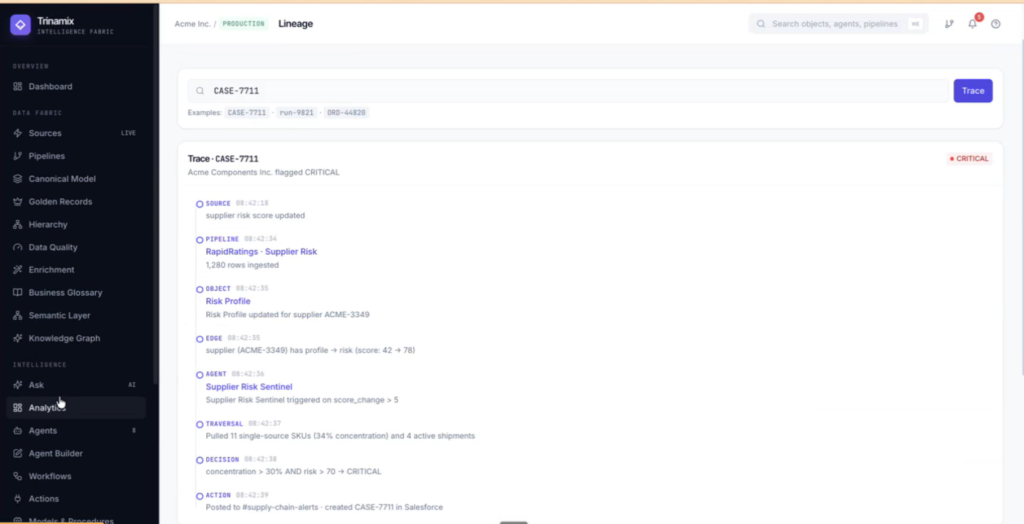
Every value shows exactly where it came from: which system, which table, which field. Every answer can be explained before anyone acts on it.
UniVerse vs. General-purpose AI
AI built to run your business.Not just to chat about it.
ChatGPT and copilots can summarise a file you paste in. They don’t stay connected to your systems, don’t know your business rules, and can’t show where a number came from. UniVerse does all three and acts.
| What decides an enterprise purchase | General AI & BI | UniVerse |
|---|---|---|
| Live connection to ERP, SCP & CRM | × | ✓ |
| One governed model across every system | × | ✓ |
| Every answer traceable to source transactions | × | ✓ |
| Cross-functional questions in one hop | × | ✓ |
| Writes decisions back into systems of record | × | ✓ |
| Live in weeks, not an 18–36 month program | × | ✓ |
Business outcomes by Industry
Built for How Your Industry Actually Runs.
Manufacturers run on more disconnected systems than any other industry: ERP, MES, PLM, quality, and supplier portals. UniVerse unifies them into one governed model, so disruption surfaces before it reaches the line.
Key Intelligence Use Cases
Business Outcome
- Supplier risk detection across SLA history, concentration, and severity
- Inventory rebalancing across distribution centers, cost-optimized and routed for approval
- On-time-in-full (OTIF) root cause across suppliers, quality holds, and allocation
- Order-risk escalation before the commit date slips
- Production and capacity intelligence across plants and lines
- Cross-ERP unification after a merger or acquisition
OTIF
Root cause surfaced across every system, not reconstructed after the fact.
Inventory carrying cost
Root cause surfaced across every system, not reconstructed after the fact.
Supplier disruption lead time
Risk flagged before it reaches production.
CPG businesses run demand in one system, trade promotions in another, and supply in a third. UniVerse unifies them into one shared model, so a forecast change made by a planner lands directly in the system that executes it.
Key Intelligence Use Cases
Business Outcome
- Demand forecast editing in natural language, pushed straight into the source planning system
- Promotion effectiveness across customers, items, and channels
- Price and trade-spend intelligence to protect margin across categories
- Customer and product master data unified across ERP, CRM, and trade systems
- Self-serve dashboards for brand and category teams, without an IT ticket
Forecast accuracy
The planner overrides the engine, and the override sticks.
Promotion ROI
Effectiveness measured across customer, item, and channel, not after the campaign closes.
Time to answer
From a report request to a question anyone on the team can ask.
Demand sits in one system, inventory in another, and customer history in a third. UniVerse unifies them, so store and category teams act on one trusted view instead of stitching reports together.
Key Intelligence Use Cases
Business Outcome
- Fill-rate and stockout risk across channels and distribution centers
- Demand forecast editing in natural language, pushed straight into the execution system
- Customer 360 across ERP, CRM, support, and finance
- Promotion and pricing effectiveness across customers, items, and channels
- Self-serve dashboards without an IT ticket
Fill rate
Stockout risk surfaced early, not reported late.
Forecast accuracy
The planner overrides the engine, and the override sticks.
Time to answer
From a report request to a question anyone can ask.
Every handoff in a distribution network lives in a different system: order management, warehouse, and finance. UniVerse connects them, so an exception is caught while it can still be fixed, not after it has already cost a shipment.
Key Intelligence Use Cases
Business Outcome
- Order exposure by customer and by warehouse
- Inventory rebalancing across the network, cost-optimized and routed for approval
- Collections and DSO intelligence with agent-drafted follow-up
- Account health: revenue, receivables, payment behavior, and service risk in one view
- Cross-system unification after an acquisition or new distribution partner
DSO
Exposure by customer, with the collection email already drafted.
Inventory carrying cost
Imbalances found and rebalanced through the most cost-optimal option.
Manual reconciliation hours
The stitching work that disappears.
Transportation, warehouse, and order systems each know a piece of the shipment. None of them knows the whole journey. UniVerse connects them, so delivery risk surfaces while there is still time to act.
Key Intelligence Use Cases
Business Outcome
- On-time delivery risk across TMS, WMS, and ERP
- Order-risk escalation before the commit date slips
- Inventory rebalancing across the network, cost-optimized and routed for approval
- Supplier and carrier risk detection across SLA history and severity
- Self-serve dashboards for logistics and operations teams, without an IT ticket
On-time delivery
Risk surfaced before the date slips.
Supplier and carrier disruption lead time
Risk flagged before it reaches the customer.
Manual reconciliation hours
The stitching work that disappears.
High tech runs on short lifecycles and long supplier chains: ERP, PLM, MES, contract manufacturers, and distributor POS, each holding a piece of the truth. UniVerse connects them, so component risk and demand shifts surface while there is still time to reallocate.
Key Intelligence Use Cases
Business Outcome
- Component shortage and allocation intelligence across products, customers, and design wins
- Supplier and contract manufacturer risk detection across SLA history, concentration, and severity
- End to end demand signal unification across distributor POS, channel inventory, and ERP
- Order-risk escalation before the commit date slips, scored against live component availability
- New product introduction readiness across PLM, sourcing, and manufacturing
- Cross-ERP unification after a merger, acquisition, or product line divestiture
Allocation decisions
Scarce components routed to the orders that protect revenue and design wins, not to whoever escalated loudest.
Component disruption lead time
Shortage risk flagged across every tier before it reaches the build plan.
Excess and obsolescence
Channel and buffer inventory visible in one view, before the lifecycle ends it.
Pharma supply chains generate as much paperwork as product: quality documents, contracts, purchase orders, and supplier certifications, most of it handled manually. UniVerse turns those documents and systems into one connected, traceable model.
Key Intelligence Use Cases
Business Outcome
- Document intelligence for invoices, contracts, purchase orders, and quality documents
- Supplier risk detection across SLA history, concentration, and severity
- Lineage and provenance for every field, supporting audit-ready traceability
- Inventory rebalancing across distribution centers, cost-optimized and routed for approval
- Cross-system unification across ERP, quality, and supplier portals
Document processing time
Structured extraction replaces manual review.
Traceability
Every answer traced back to its source, ready for review.
Manual reconciliation hours
The stitching work that disappears.